

For Asia, There Is No Return to the Status Quo Ante
In recent years, a series of shocks has rattled the global economy and exposed how quickly vulnerabilities can spread through interconnected markets. The COVID-19 pandemic, Russia’s invasion of Ukraine, and attacks on commercial shipping in the Red Sea all had immediate impacts for supply chains and trade routes. In many cases, markets adapted quickly. In others, seemingly manageable disruptions had cascading longer-term effects that proved harder to anticipate but had more lasting consequences. The ultimate impact of these episodes is not in the initial disruptions themselves but in how their effects reverberated economically, commercially, and strategically over time.
The same is true of the disruptions to transit through the Strait of Hormuz since March 2026, and nowhere have the shocks been felt more acutely than in Asia. Prior to the Strait closure, roughly 80 percent of the oil and nearly 90 percent of the LNG transiting the Strait was destined for Asian markets, along with a major share of other critical commodities including petrochemicals, plastics, aluminum, helium, sulfur, and fertilizers that feed manufacturing, agriculture, and consumer markets worldwide.
Against this background, I’m pleased to share with you a new initiative The Asia Group (TAG) is launching to assess the indirect, slower-moving, and second-order effects of the Strait’s closure for Asia. It draws on TAG’s cross-cutting expertise across more than a dozen Indo-Pacific and Gulf markets and the capabilities of our dedicated AI team, whose tools allowed us to model scenarios, stress-test assumptions, and identify consequences that traditional analysis would likely have missed. The report is published in an interactive, visual format and will be updated as conditions evolve. We designed it as a living resource and look forward to sharing more analysis with you in the months ahead. You can also read about it the New York Times.
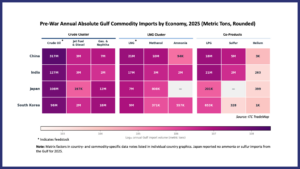
For Asia’s major economies, the closure of the Strait exposed vulnerabilities that were broader, deeper, and more interconnected than many policymakers, investors, and businesses appreciated. Some of the most important consequences will emerge only gradually — in inflation, investment decisions, supply chains, domestic politics, and geopolitical alignments.
The effects so far have been felt unevenly across Asia. Emerging markets were hit first and hardest. India has thus far proven resilient but remains vulnerable to a broader slowdown. Advanced economies such as Japan and South Korea entered the crisis with stronger buffers but would face difficult fiscal and political trade-offs if disruptions persist. China alone looks to emerge relatively better off from the crisis. For the Indo-Pacific’s other largest economy — the United States — the full impacts are only beginning to be felt.
Among our central findings:
Resilience has limits. The initial blow of the Strait’s closure was cushioned by strategic reserves, commercial inventories, and demand-management measures — most notably by China — as well as by favorable timing that should not be taken for granted. There was still slack in oil and helium markets when the Strait closed, and the closure came just after peak Northern Hemisphere winter demand. But markets and policymakers should take little comfort: reserves and stockpiles do not replenish themselves, and many of those buffers are now worn through. Should the ceasefire falter, or transit resume only partially and fitfully — as has been the case so far — the global economy is poised for a second blow it is far less equipped to absorb.
Inflation will be stickier than markets expect. As with COVID and the 2022 energy crisis, first-round price effects are likely to prove more persistent than forecasts suggest. A restocking cycle is now colliding with fragile supply chains, with households bearing a disproportionate burden. Far graver consequences loom for food security in lower-income countries already facing fertilizer-driven harvest pressures. Healthcare also faces a slow-moving but significant squeeze if disruptions persist. The crisis is raising the cost of pharmaceutical inputs, squeezing generic drugmakers’ markets, and disrupting supplies of helium and naphtha that are critical to medical equipment from syringes and IV bags to MRI machines.
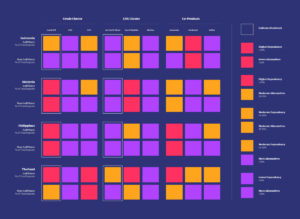
China is the clearest strategic beneficiary. China is not immune from pain points, but the second-order effects of the crisis run in its favor. China’s relative insulation from supply and price shocks gives it a further competitive edge and deepens economic dependencies it can leverage for geopolitical advantage. Meanwhile higher energy prices are accelerating the global push into renewables — the one part of the global energy stack that China dominates. As countries across Asia confront the economic and political fallout from what they largely perceive to be a U.S.-instigated crisis, even some U.S. partners will have incentives to hedge back towards China.
The United States faces compounding strategic costs. The United States was less directly exposed to disruptions in the Strait than many Asian markets, but it remains vulnerable to global commodity price shocks and the inflationary pressures they transmit. Prices are higher — not only at the pump but for food, electricity, and health care. There is also a risk to the U.S. economy’s defining growth story: the AI buildout. Higher costs for energy, materials, and capital could weigh on investment or introduce new bottlenecks in a supply chain that is already stretched to its limits, slowing the expansion of the data center infrastructure underpinning the boom. And then there are the strategic costs. Much of the world sees this as a crisis Washington helped precipitate, and the crisis has pulled U.S. attention and assets back to the Middle East at a pivotal moment, straining burden-sharing with allies like Japan and Korea and complicating efforts to sustain strategic focus on the Indo-Pacific.
The question now is not whether the world returns to pre-crisis conditions, but how governments and markets adapt to a future in which the reliability of one of the world’s most important trade corridors can no longer be taken for granted. These questions are most acute in Asia, which remains deeply dependent on the flow of trade through a small number of strategic chokepoints, many of which sit at the intersection of intense geopolitical competition. The resumption of shipping alone cannot restore the confidence that has been lost. For Asia, there is no true safe harbor.
Best,
Kurt
Watch: Five Markets, Five Stories
Behind the Findings
In The News
-
The New York Times — China Emerges as a Relative Winner From Strait of Hormuz Crisis
-
The Guardian — China is a clear winner from Trump’s war in Middle East, report concludes
-
CNN (video) — Crisis in Hormuz a net win for China for now, says consulting firm
-
Nikkei — 米イラン衝突「勝者は中国、日本に逆風続く」 キャンベル前国務副長官 (US-Iran clash: “The winner is China; headwinds continue for Japan,” says former Deputy Secretary of State Campbell)
-
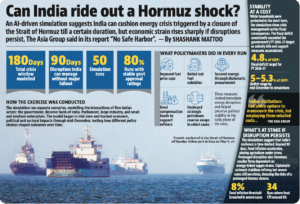
Hindustan Times — How would India cope if Strait of Hormuz disruption lasted longer? AI simulation reveals risks
Did someone forward this email to you?
Sign up now to make sure you never miss an issue.