
“China wants this war to end badly enough to act but not badly enough to be seen acting,” said Han Lin, China Country Director of The Asia Group. “China is almost certainly applying pressure but you just won’t see it on a podium.”
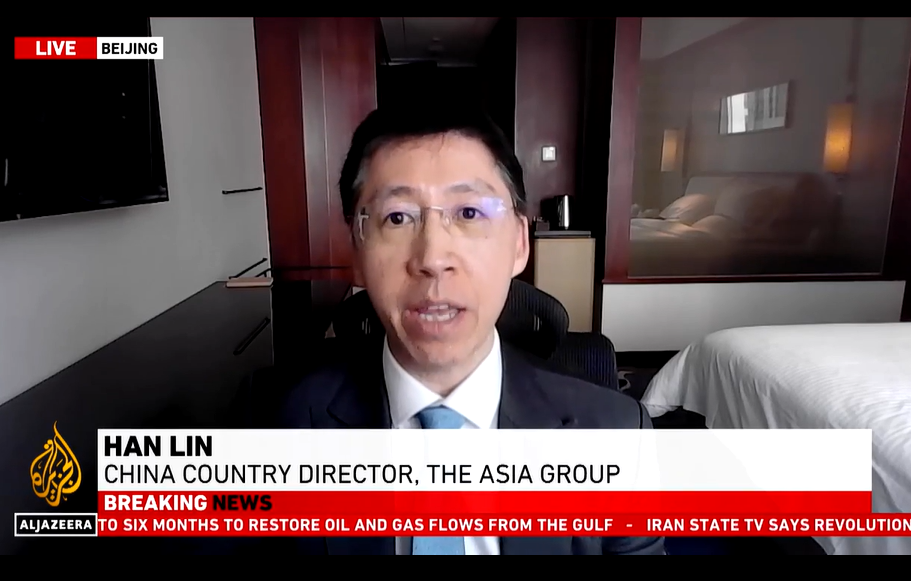
On why China isn’t loudly pushing to reopen the Strait of Hormuz:
China wants this war to end badly enough to act but not badly enough to be seen acting. China gets roughly 40% of its oil through the Strait of Hormuz, so the economic stakes couldn’t be higher. But Beijing doesn’t do megaphone diplomacy. It works the phones quietly — through back channels with Tehran, through the Gulf states it’s cultivated, through the Shanghai Cooperation Organization. China is almost certainly applying pressure but you just won’t see it on a podium.”
On whether China does diplomacy differently:
Absolutely. Washington leads with public ultimatums and sanctions. Beijing leads with economic leverage and face-saving off-ramps. China’s playbook is: never embarrass a partner publicly, never close a door permanently, and always leave room for yourself to do business with everyone when the smoke clears. That’s not weakness, that’s strategic patience.
On whether China will step in, and whether it needs to:
China will step in — but not with aircraft carriers. It will step in with phone calls, with oil contracts held in reserve, with quiet guarantees to Tehran that its economic lifeline won’t be completely severed. Does it need to? If this conflict meaningfully disrupts its energy supply — yes, Beijing has no choice. Its domestic stability depends on energy security.
On what Chinese intervention actually looks like:
Don’t expect a Chinese envoy flying into the region with a peace plan and cameras rolling. Expect a senior CCP official making an unannounced stop in Tehran. Expect Chinese state media suddenly amplifying ceasefire language. Expect Beijing offering to host talks — quietly framed as ‘economic stability consultations.’ China intervenes by reshaping the incentive structure, not by deploying force.